With the rapid development of artificial intelligence (AI) technology, smart homes are leaping from "functional" to "intelligent." The deep integration of AI with cutting-edge technologies such as the Internet of Things (IoT), machine learning (ML), and natural language processing (NLP) is driving the transformation of traditional homes towards intelligence, ecology, and personalization. Smart home devices are no longer just simple automation tools, but have become a continuously expanding market with a double-digit compound annual growth rate. In this wave, how can AI become a proactive, data-driven, and ecosystem-collaborating smart living partner? How will global smart homes reshape our homes and living scenarios? What challenges and opportunities will it face?
Smart Home Furnishings: Creating Personalized Living Spaces
The home of the future will no longer be a simple place to live, but a personalized living space filled with intelligence and emotion. AI technology will enable home devices to learn and adapt, automatically adjusting environmental settings based on user habits and preferences. For example, intelligent temperature control systems can automatically adjust indoor temperature according to user habits, and intelligent security devices can monitor home security in real time through facial recognition technology, immediately sending alarm information in case of abnormalities. Haier Smart Home's "brain," through multimodal perception technology, can recognize user emotions and automatically adjust the environment. For example, if it detects that the user is tired, the air conditioner will adjust to the most suitable sleep temperature, the lights will switch to a warm yellow, and the sound... Playing soft, natural white noise.
The interconnectedness of smart home appliances will further enhance the convenience of life. Smart refrigerators use image recognition technology to automatically identify the type and expiration date of food, generate personalized recipes based on user dietary habits, and automatically order restocking when ingredients are low. Smart air conditioners use multi-sensor fusion to monitor indoor and outdoor temperature and humidity, as well as people's activity patterns in real time, dynamically adjusting fan speed and temperature to reduce energy consumption while improving living comfort. The widespread adoption of home robots makes housework easier and more enjoyable. They can not only perform delicate tasks such as petting cats and feeding pets, but also adjust lighting and music by analyzing user emotional data, playing soothing music to relieve stress.
Technology Convergence: The Smart Ecosystem of AI + IoT
The combination of AI and IoT is the core of the smart home ecosystem. Through hardware such as sensors, cameras, and voice assistants, home devices achieve interconnectivity and data collection. AI, through technologies such as machine learning, natural language processing, and computer vision, analyzes and makes decisions based on this data, enabling automated and intelligent control.
Main Technology Paths:
- Machine Learning and Deep Learning: Used for behavior prediction, device adaptation, and health data analysis.
- Natural Language Processing (NLP): Enables natural dialogue and command recognition for voice assistants and smart speakers.
- Computer Vision: Empowers cameras, door locks, etc. Achieve facial recognition, behavior analysis, and anomaly detection.
- Multimodal perception: Integrates visual, auditory, and tactile perception capabilities to enhance the naturalness of interaction.
- Edge computing and edge AI: Improves response speed and enhances privacy protection.
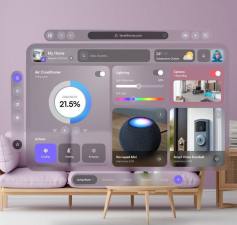
AI-driven personalized and proactive service experience
Personalized scene linkage:
AI learns users' lifestyle habits to achieve personalized scene linkage. For example: Home Mode: When the user arrives home, AI automatically adjusts the lights, air conditioning, and plays favorite music.
Away Mode: Automatically turns off unnecessary appliances and activates the security system.
Sleep Mode: Automatically adjusts lights and temperature based on the user's schedule and plays background music.
Proactive Health Protection
AI monitors users' health status in real time through smart wearable devices and health monitoring systems, providing personalized suggestions and alerts. For example: Health Data Analysis: AI analyzes data such as heart rate, blood pressure, and sleep, issuing timely alerts for abnormalities.
Dietary Management: Smart refrigerators combine health data to recommend personalized dietary plans.
Exercise Incentives: AI develops exercise plans based on users' health goals and provides real-time feedback.
Entertainment and Interactive Experiences
AI-driven smart audio-visual systems, virtual reality (VR), and multimodal AI assistants bring immersive entertainment and content recommendations to family members based on user interests. Recommended content includes movies, music, and games.
Multimodal Interaction: Supports multiple interaction methods such as voice, gestures, and touch, enhancing the user experience.
Virtual Assistants: Such as Amazon Alexa, becoming a smart home manager.
Age-Friendly and Accessible Services
AI voice assistants and health monitoring functions provide convenience for the elderly and special groups, improving their quality of life at home.
Voice Control: Simplifies operation processes, lowering the barrier to entry for the elderly.
Health Protection: Real-time monitoring of health status, automatic alarms or notifications to family members.
Emergency Call: One-click call to family members or medical services, enhancing a sense of security.
Conclusion
Looking to the future, AI... Deeply embedded in every corner of digital life, AI is becoming a fundamental force driving social progress and lifestyle transformation. With continuous breakthroughs in large-scale modeling technology, AI devices will possess stronger understanding and interaction capabilities, moving from simply "understanding" to "comprehension," and from "passive response" to "proactive service." Age-friendly smart products, AI education terminals, and intelligent health management will become new growth drivers in areas related to people's lives. More importantly, AI is driving new lifestyles. When smart devices become an extension of our perception of the world, and when AI assistants become our life partners, consumption is no longer a simple exchange of goods, but a process of deep connection between people and technology, and between people and the world.